News
Eating our own dog food
How four founders from one family built Artemis Petconnect, an AI-first pet-care company, self-funded, on nights and weekends.
Most mornings this year started the same way. Around 4:30 a.m., before my day job, I'd pick up my phone and write a spec for askKynos. It might cover how referral credits should settle, what a pet parent should see when there are no sitters nearby yet, or how the facts in an uploaded vet report should flow into a pet's profile.
What made those specs unusual was what read them. They weren't written only for a developer. They were written so an AI could help my wife, our CTO, turn them into working code. That forced a different kind of precision: every edge case named, every assumption stated, nothing left to a hallway conversation that was never going to happen. When I sent her the vet-report spec in July, her reply was the one I'd come to expect: “Oh, that's easy.”
Usually, she was right. How that became possible is the story I want to tell.
I'm 68. I've spent about forty years in technology, and much of that time I watched organizations lose what they knew whenever responsibility passed from one person or system to another. I could have retired. Instead, I started one more company, and I started it with my family.
There are four of us, all equal co-founders. My wife is our CTO and CFO and a PhD data scientist. Our son is VP of Engineering. In May he wrote the software design document the platform still runs on. Our daughter-in-law is our CMO, and in many ways she is the reason the company exists. She has worked as a sitter and adopted animals into her own home. She knows what it's like to be “the someone new” at the door, holding a page of instructions for an animal whose whole life doesn't fit on that page. My wife and I live in Florida, and our son and daughter-in-law live in Georgia. Those two states became our launch market.
We incorporated Artemis Petconnect in April. We have no investors. Nearly everything was built on nights and weekends by people who already had full-time jobs.
Here is what that has produced so far. askKynos™ is available across the United States on the web, in the App Store, and on Google Play. We started in Florida and Georgia, and that is where we are building density first. Early adopters anywhere in the country can start a pet story or a sitter profile and help open the network where they live. Pet boarding has been live since July, and as of today dog walking and pet daycare have joined it. The app includes an animated dog named Kynos who greets you and your pet by name, a Vet Assistant that reasons from your pet's history, Smart Match for pairing pets with sitters based on fit rather than distance, a referral program, and a Founding Sitter Pledge. Real sitters are signing up. Around the product we've built Terms of Use, privacy and cookie policies, business insurance, and a trademark that went through publication to a Notice of Allowance. We also have two websites, a library of Insights articles, a YouTube channel, paid campaigns, local outreach, and press conversations.
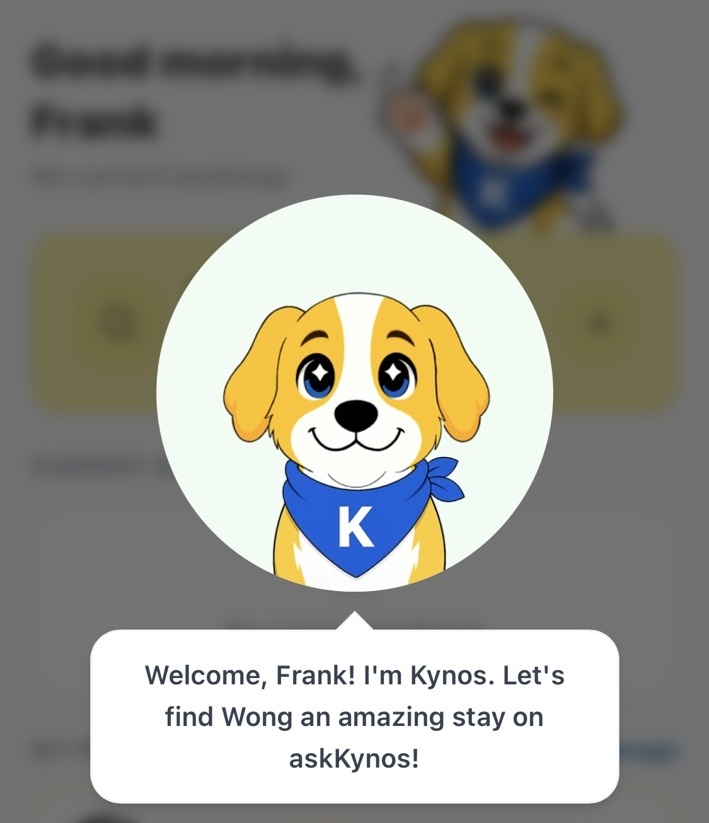
We didn't get all of that done because we're unusually fast. We got it done because from the first week we assumed AI would be part of how the company operates, not a feature we'd bolt onto the product later.
In practice, that looked different for each of us.
Our CTO writes code with Codex and Claude, and she has kept getting faster at it. In June she solved the latency problem in Kynos's avatar, the delay between what they “think” and when their mouth moves, and brought it close to real time. Our son designed the architecture and built things many early apps postpone. By late July, a booking could be created on an Android phone and accepted by a sitter, with a push notification landing on an iPhone, a cancellation flowing back the other way with its reason attached, and email confirmations arriving in parallel. Our CMO built our brand system and designed the product's UI and UX, including Kynos's artwork and visual character. She used AI for visual exploration and creative iteration.
We also cover each other's hours. My wife and I are the early birds; our son and daughter-in-law are the night owls. On launch day, that meant someone in the family was watching the platform from before dawn until well after dark. They still keep those hours. As we got Dog Walking ready to launch, the two of them were out testing it at midnight.
My job was everything in between: strategy, documents, websites, copy, research, campaigns, and work we had never done as a company before — including a trademark. In March, AI walked us through how to file. The mark published, the opposition window closed, and we now have a Notice of Allowance. We are starting to use askKynos™ as we go live. Before launch, AI helped me rewrite our messaging across seventeen placements. When we needed a voice for Kynos in May, I had AI build a small audition tool, and we chose one that afternoon.
My co-founders will tell you, fairly, that they don't read most of my documents. For much of this year, those documents were my organizing system, not the team's communication system. The specs were different: an AI read them, and the AI read every word.
That brings me to eating our own dog food.
The whole premise of askKynos is understanding. The first thing Kynos says when you sign up is: “What's your dog's name? I promise I'll remember it forever.” That promise is the difference between a system that knows who logged in and one that knows who your pet is. Logging in is not the same thing as being known. We believe a pet's story shouldn't disappear every time care changes hands. The sitter shouldn't start from zero, the pet parent shouldn't have to repeat everything, and the next decision should be better informed than the last one.
Somewhere along the way, without really planning it, we started running the company on the same principle. My working sessions with AI carried context from month to month: decisions we'd locked, taglines we'd agreed to use word for word, our rule never to name competitors, even the reason we'd pulled an ad. I didn't start over each morning. I picked up where the previous morning left off, and each piece of work began with more understanding than the one before it.
We used to joke that we were eating our own dog food. The truth was, askKynos was being built the same way we believed pet care should work: with accumulated context, better understanding, and AI doing more of the heavy lifting each time.
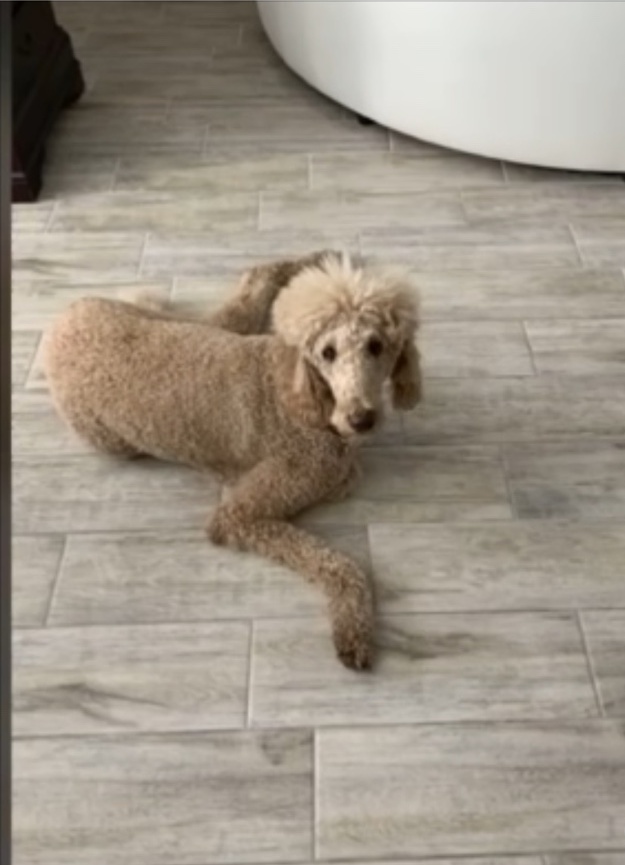
The product proves the point better than I can. During testing on June 8, one of us added a dog who happened to be named Kynos. Nobody had written a line for that situation, because Kynos's dialogue is generated by reasoning, not pulled from a script. They looked at the new profile and said, “Nice to meet another Kynos.” A few weeks later I tested the Vet Assistant with my own standard poodle, Wong. The Assistant already knew he was on prednisone and which clinic he goes to, and it flagged a possible problem with a flea treatment. It could do that only because his story was already in his profile. That is the entire idea of the company.
The moment I understood what this way of working really meant came just days before launch, and it involved that same voice.
We had tuned the whole avatar around the voice we chose in May. At a family board meeting that final weekend, our CMO made the case that it wasn't good enough. We had put so much polish into everything else, and their voice is the first thing a new user hears. She wanted the best voice we could get, and our CTO backed her.
In the large-company technology world where I spent most of my career, you don't do that. Days before go-live, a system is frozen. Changing something as visible as the product's voice means weeks of testing, sign-offs, and a change board, and the answer is almost always “next release.” I went to bed that night assuming it couldn't be done in time.
When I woke up, my wife had already done it. Kynos was speaking in a new voice from Cartesia, a company built around fast, natural real-time speech, and their original voice was still in place as an automatic backup in case the new one ever failed.
She didn't take a reckless risk. The product had been built in pieces that could be swapped without tearing down everything around them, and she was using AI tools that let her move from a decision to a tested, working change about as fast as she could think it through. What could have become a months-long change request in my old world took one night in our new one. I stopped assuming I knew what “impossible” meant.
AI made us faster. It did not make our decisions.
We had set launch for June 30, and we missed that date on purpose. Our son was running testing with our volunteer testers and shepherding the app through Apple's review. We took two more weeks of their feedback, let the review finish, and launched on July 15.
The best sentence anyone has written about our company came from my wife in a planning conversation: “We help people carry understanding forward from one caregiver to the next.” No model gave us that line. It reframed the whole business.
Our Founding Sitter Pledge gives the first 1,000 sitters a permanent badge and zero advantage in Smart Match rankings. Rewarding early sitters with better placement would have been easy to justify. We decided the match should be about the pet.
The AI and I disagreed often, and it went both ways. When I proposed a separate senior-pet-care product, the analysis pushed back and turned up competitors I hadn't weighed. We did not build a second company. Senior-pet guidance went into Vet Assistant instead — free, and live in the app.
Even this story went through that process. Our origin video, Why we built askKynos, is about our dog Wong and the family that needed a better handoff. This piece is the other half: what that same family was able to build because we treated AI as part of how the company works.
Plenty didn't work, and the misses taught us just as much.
Our first paid social campaigns produced exactly zero sitters who signed up on their own. We found and fixed a sign-in bug that appeared only inside Facebook's in-app browser on Android, but the bigger lesson held. The first sitter who found us on her own signed up overnight on September 1 in Savannah, after my wife posted in a local Reddit community. At first, Nextdoor was quiet too; then a local post brought us another five-star sitter. AI can write a hundred versions of an ad. It can't make a neighbor trust you. That still takes relevance, credibility, and showing up in the community.
Looking back, our use of AI changed shape as the year went on.
In the spring, AI was a writing and coding partner. By summer it was inside the product. Today askKynos draws on three frontier AI labs across four systems: reasoning, veterinary knowledge, real-time voice, and automatic voice failover.
Then, in late August, AI search tools started describing askKynos accurately on their own: who we are, what we built, and how we compare. We had built the company with AI, and now AI was becoming one of the ways people found us. In September we began publishing our Insights articles on how matching actually works, partly so people, and the machines they ask for help, would learn our language early. On September 16 our first ads went live inside ChatGPT, reaching people while they were already asking an AI about pet care. It's still early, but it is the first paid channel that has felt naturally aligned with how people discover us.
And the first version has been live for less than three months. Today we added dog walking and pet daycare, and Smart Match changed with them. A boarding match and a walking match should not ask the same questions. Walking can depend on size, strength, leash behavior, mobility, and reactivity; daycare adds questions about environment and social compatibility. The product grows by carrying the pet's existing story forward and then adding what each new kind of care requires. That is what “AI-first end to end” means to us: not one chatbot bolted onto a marketplace, but understanding that persists across the product as the services change.
I want to be careful about what this story claims. Four people are not doing the work of thirty, and a lot on our list still isn't done. The honest question is narrower and, I think, more interesting: what happens when a very small, self-funded family team builds a company assuming from day one that AI is part of the operating model?
So far, our answer is breadth and speed we couldn't have had otherwise. The hard parts are still human: judgment, taste, trust, and deciding what not to build.
I thought this might be the year I retired. Instead, I spent it building something with my family, often at 4:30 in the morning, with a new kind of coworker that remembered what we decided yesterday.
Every pet deserves to be understood. That is not a slogan. It is the philosophy we built the company on.
Also in News
Dog walking and pet daycare are now live on askKynos →
Walking and daycare join boarding. Each kind of care asks different questions of a match.
For the life of your pet, askKynos keeps learning what matters. Download askKynos on the App Store ↗ or Google Play ↗, or use it on your computer ↗. The app is available across the United States; we're building local communities first in Florida and Georgia. Come see what Kynos says to you.
Artemis Petconnect is a family-founded pet technology company in Hudson, Florida. Its first product, askKynos, carries what is learned about a pet forward across different caregivers and different kinds of care.
Questions: hello@artemispetconnect.com
askKynos™ is a trademark of Artemis Petconnect, Inc.