News
Eating our own dog food, part 2
How a self-funded family used Claude to build and expand askKynos™ — and why continuity of understanding became the common thread.
“Help, I ran out of spend in my account.”
That email came from my daughter-in-law a couple of nights before October 1, 2026, when my family and I launched a major expansion of askKynos, the AI-powered pet care platform we had introduced in July. Dog walking and pet daycare joined boarding. The app, policies, and supporting services were updated, and two websites with different jobs were brought into alignment.
The company had no employees. All four founders still had full-time jobs. And I, the CEO who worked on those two websites, had not written a single line of code.
What we did have was a Claude Team plan, a commitment to working nights and weekends, and a belief that AI could give four people breadth and speed we couldn’t have had otherwise. Here is how we got there.
Two decisions at the family table
In March 2026, my wife, our son, our daughter-in-law, and I decided to build something different: a pet care platform that started by understanding the pet, rather than simply finding an available sitter.
We had a plan on paper. We were still working through the company and product names, trademarks, and incorporation. We did not yet have a company, much less a product. But we increasingly believed we had something worth building.
Then reality set in. We had no outside investors and limited money. If we were going to do this, it would happen in our off-hours.
Looking back, we made two decisions that changed everything. First, we agreed to build it as a family, with equal ownership.
The second came from my wife. She got us a Claude Team plan. We were not hiring a staff. We were giving four people a way to work alongside AI, build on what we learned, and do more than we could have done alone.
That is how we began building askKynos. And somewhere along the way, I noticed that the way we worked was becoming remarkably similar to the idea behind the product we were building.
A major expansion, and a clock running out
We launched askKynos in July 2026 with one service, dog boarding. It was a deliberate minimum viable product: something real in the market that we could learn from and keep building on.
Next we chose dog walking and pet daycare, two of the most valuable services we could add and two of the hardest to build. That meant new workflows, updated policies and legal documents, both websites revised, and all of it tested together, by four people with full-time jobs.
We committed to an October 1 expansion. After weeks of work, with just a couple of nights left, we were running out of the one thing we could not buy more of: time.
That was when my daughter-in-law went to Claude jail for the first time.
When we started, my daughter-in-law drew our characters by hand and helped our son identify what needed changing in the app. A few months later, she was making interface changes herself with Claude’s help. That was an extraordinary leap in what she could do.
The rest of us had been to Claude jail plenty of times. She had not—until she hit a usage limit during the late-night push and sent the frantic email I opened with.
My instinct, after about forty years in technology, was to give her whatever she needed, right then. My wife and son were calmer. Before long, she was back at work. It felt like someone had played the old Monopoly “Get Out of Jail Free” card.
At our go-live meeting, I asked what she’d needed. “Nothing,” she said. “I’m good.”
It was seamless. And I remember thinking, again: this is a new world.
A Team plan and a jail
AI-first was not a feature we added later. It was how four people planned to do the work of a company without hiring anyone.
Our Claude Team plan was how the work got done. Each of us had a seat and a different responsibility. When someone hit a usage limit, Claude made them wait for it to reset. I called it jail. In the early days, I landed there repeatedly: long documents, followed by revision after revision, could burn through my limit before the night was over.
To the model, waiting costs nothing. To us, it can cost a night. Our spending is capped, and our nights are already spoken for. Still, nobody has ever turned jail into a request to hire someone.
Ownership without bottlenecks
Artemis Petconnect has four co-founders. Each of us owns 25 percent. That was a deliberate choice, and one of the best decisions we made.
I funded the company. Over a long career, I was often given a little stock by someone who kept 51 percent. I understood the reasoning. I just didn’t need to do it that way.
When it came time to build something of my own, I didn’t want to be the majority owner. I wanted my family to own it together.
Nobody waits for me
Equal shares changed how we work. Each of us has the authority to move our part of the company forward without waiting for my approval.
My daughter-in-law owns the brand and the interface, including Kynos. My wife develops the app with Claude, Claude Code, and Codex.
Our son brought the architectural knowledge that turned our idea into a working app. He manages the code through GitHub and writes the code that makes it work. When we added dog walking, he designed how GPS would work inside the app. I had never built an app before; he knew how to make the pieces fit together. Claude extended that expertise. It did not create it.
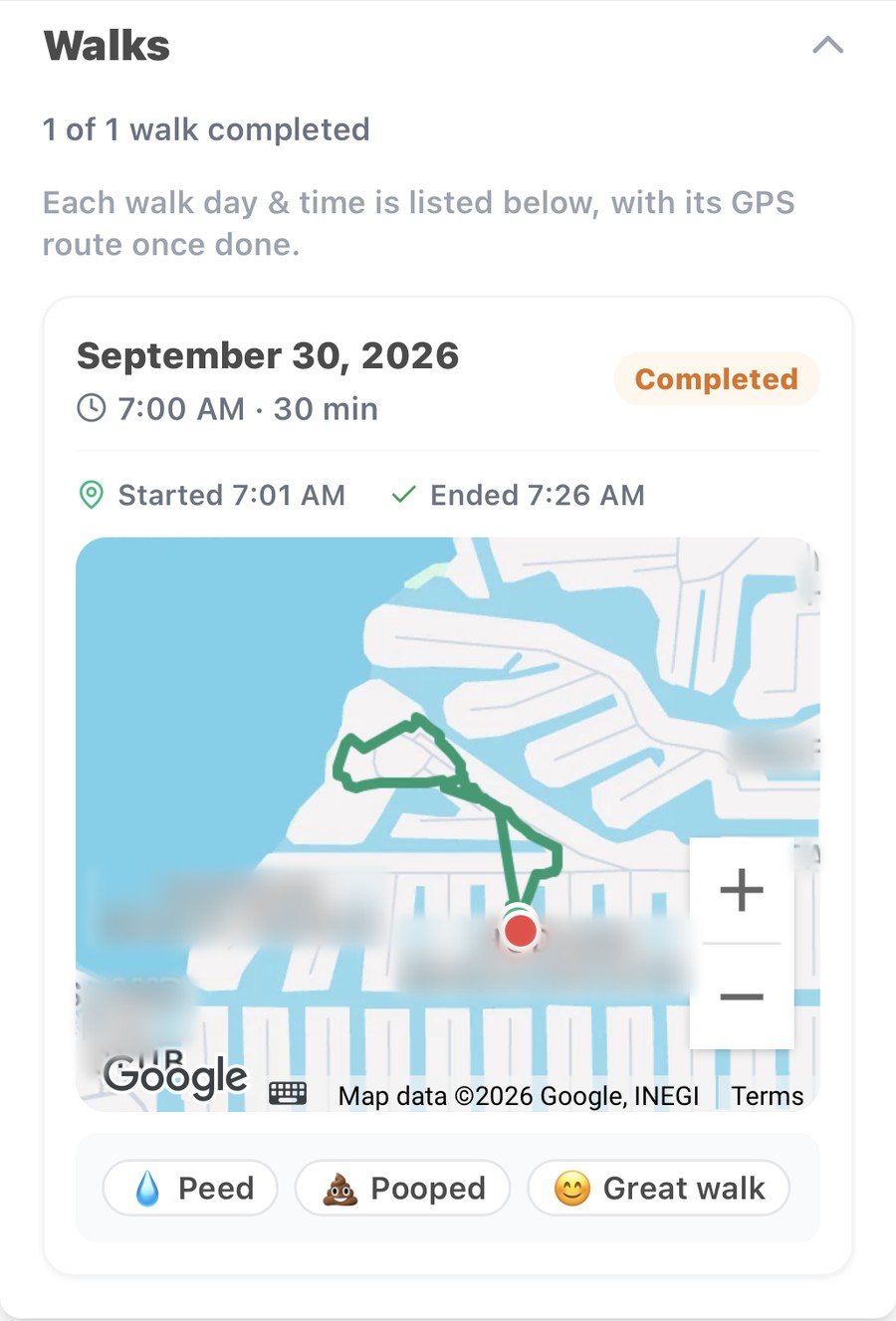
My job is the specs, the websites, and the stories. As I said in our origin video, we had four people sitting around the same family table who, between them, had the skills to get this done. We knew that was unusual. We took advantage of it. Claude made the four of us faster. It was never a substitute for the people around that table.
The breakthrough was context
The AI models kept improving on their own schedule. But the biggest change we felt wasn’t a benchmark or a new feature. It was context.
We started using Claude Projects in April 2026. It was new to all four of us. Over time, it gave each of us a way to work alongside an AI assistant that understood our particular responsibilities—and let four people cover far more ground.
Each project has instructions and knowledge specific to the work. My daughter-in-law’s carries the interface context. My wife’s and son’s carry the app. Mine carries the specs, the sites, and the story. We put decisions and working material where the next session can use them. Instead of starting over each morning, we can start a little further along.
The clearest proof was our two websites.
Two websites, one chat—and no code from me
Over my career, I worked with plenty of marketing teams that built websites. I understood the process. I’d written content, reviewed sites, and worked with the people responsible for publishing them. But I had never actually built a website myself. I didn’t need to. I had teams of people who did that.
In one organization, I had a team of thirty people. I’d write something and hand it off. Someone would edit it. Someone else would proofread it. There were approvals, legal reviews, test environments, more approvals, and finally someone would push the changes live. It could take a month, sometimes several months. For October 1, I had two websites to update and align—and no marketing department to hand them to.
We hadn’t started with two websites. Initially, ArtemisPetconnect.com tried to explain both the company and the product. That was a mistake. Later we introduced askKynos.ai as the product’s own home, then made patches to bring the sites closer together. But they had largely been developed separately. For the October 1 expansion, we finally reviewed and aligned them as one coordinated experience before adding the new services.
ArtemisPetconnect.com needed to tell the company story: who we are, why we started, and what we believe. askKynos.ai had a different job: explain the product and help pet parents understand what it could do for them. They shouldn’t say the same things, but they needed to tell the same story. In one conversation, we reviewed the words, checked the links, and corrected details—including the difference between sitters being approved within six hours and actually going live.
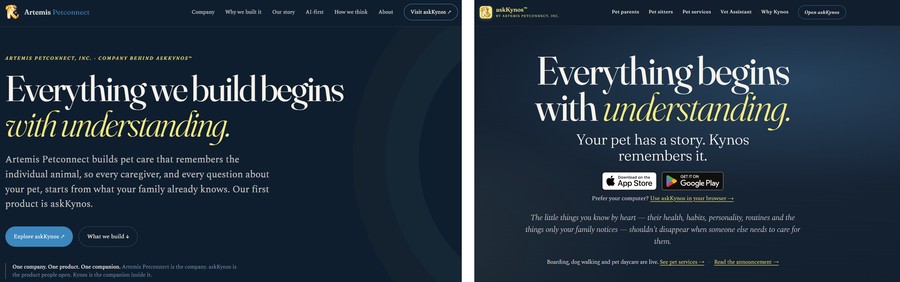
That is what context came to mean for me. Claude had built each site well in its own sessions, but neither one could see the other. What made the difference was reviewing them together in the same chat, with everything we had already decided in front of us. Claude and I went through them over and over, build after build, until they were aligned.
Once that foundation was right, we added dog walking and pet daycare as live services, updated the related content, and featured Part 1 of “Eating Our Own Dog Food.” Not because we wanted to congratulate ourselves. We wanted to share why we were building the company and how we were doing it. Our son received the finished website files and a deployment checklist and handled the release. Both updated websites went live October 1. Our checks came back clean. Work that once would have moved through a team over months took days. And I had not written a single line of code.
A fresh chat is just a login. A working environment that carries your role, the decisions you’ve made, and the constraints you work within is something else. It begins to understand you.
Logging in is not the same thing as being known.
Ten days later, a different kind of test
There was another reason to get the two websites right. We are self-funded, with limited money for advertising. We wanted to be discoverable through today’s AI-powered search engines. That meant explaining the company and product clearly enough for someone—or something—looking for answers to understand the difference. Both sites needed to be distinct, accurate, and aligned.
In Part 1, I mentioned that AI search tools had started describing us accurately on their own in late August. On October 10, ten days after the relaunch, I checked again. I opened Google in incognito mode and searched for Artemis Petconnect and askKynos. I wanted to see what the search engine understood, not just what we hoped it would say. Google’s AI Overview described Artemis Petconnect as an “AI-first pet care company founded in 2026 by a family of four,” and identified askKynos as its flagship platform. It connected the pet’s ongoing story, AI assistance, Smart Match, and the services we had just launched. It cited our website.
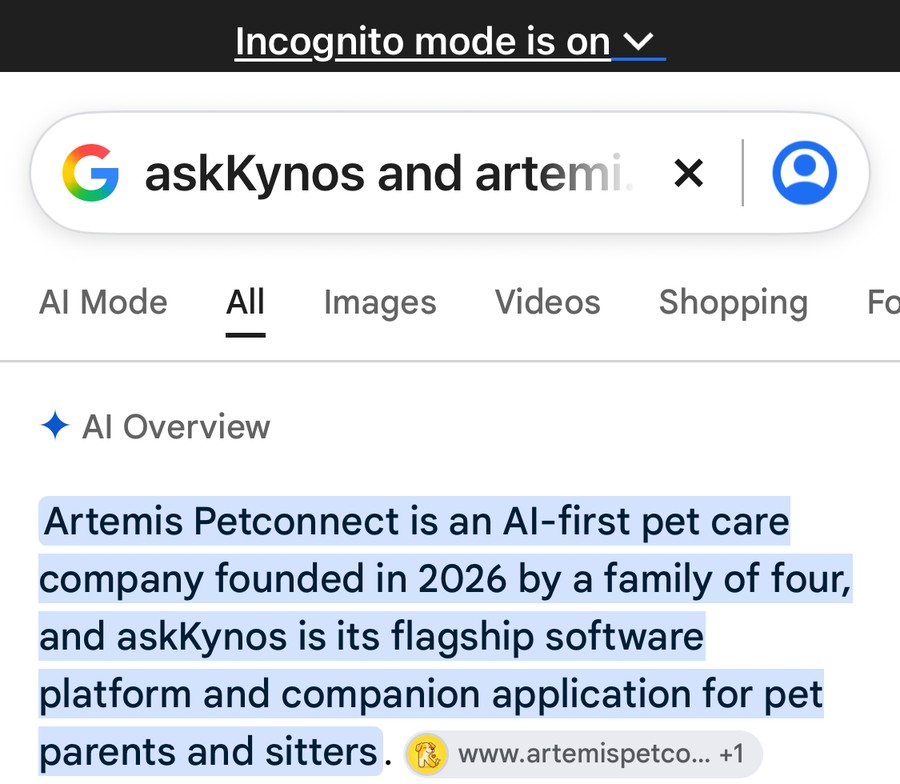
I took screenshots. One search is not a ranking victory, and incognito results are not what every person will see. But after months of work—and just ten days after the coordinated relaunch—it was something we could actually observe: an AI search engine had connected the family, the company, the product, and the services in the way we intended.
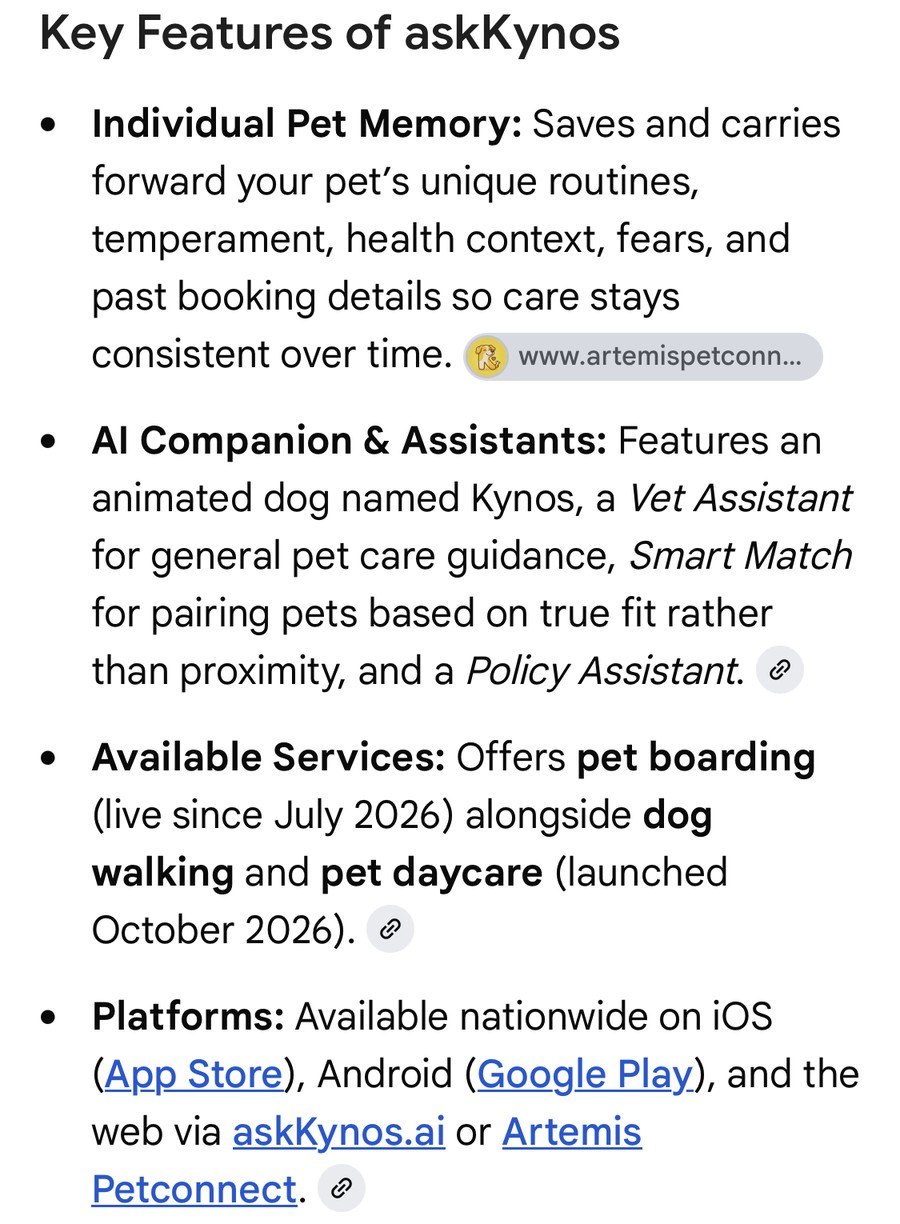
None of that guarantees customers. But when you cannot buy your way into everyone’s attention, being understood when someone goes looking matters.
The same idea, twice
“Logging in is not the same thing as being known” describes the difference Claude Projects made for our family. It also describes what we set out to build.
When a pet moves from a parent to a sitter, or from one sitter to another, the details that matter can get left behind: medications, fears, or how the pet reacts to a stranger at the door. Two of us spent two years as pet sitters before this company existed. We saw those handoffs firsthand.
We built askKynos so the pet’s story could travel with the pet, even when the caregiver changes. A boarding match and a walking match are different questions. What is learned in one experience should help inform the next. AI can help carry that understanding forward, while the people involved remain responsible for the care and the decisions.
That is what eating our own dog food means to us. We did not just build a product around continuity of understanding. We learned to work that way ourselves.
Logging in is not the same thing as being known.
Everything begins with understanding.
Also in News
Eating our own dog food (Part 1) →
How four founders from one family built Artemis Petconnect, an AI-first pet-care company, self-funded, on nights and weekends.
Dog walking and pet daycare are now live on askKynos →
Walking and daycare join boarding. Each kind of care asks different questions of a match.
For the life of your pet, askKynos keeps learning what matters. Download askKynos on the App Store ↗ or Google Play ↗, or use it on your computer ↗. The app is available across the United States; we're building local communities first in Florida and Georgia. Come see what Kynos says to you.
Artemis Petconnect is a family-founded pet technology company in Hudson, Florida. Its first product, askKynos, carries what is learned about a pet forward across different caregivers and different kinds of care.
Questions: hello@artemispetconnect.com
askKynos™ is a trademark of Artemis Petconnect, Inc.